
My Kid Wants to Be an Airline Pilot. Where Do We Start?
Cover photo: Fulvio Spada from Torino, Italy, CC BY-SA 2.0 (Wikimedia Commons)
If your son or daughter has announced they want to fly for an airline, and you have spent weeks asking coworkers, neighbours and the internet what that involves, you are not alone. Most parents hear a dozen different answers and come away more confused than when they started.
The good news is that the path to an airline flight deck in Canada is well defined. Transport Canada sets the rules, every pilot climbs the same basic ladder, and once you can see the whole map it stops feeling like a mystery. This guide covers what an airline needs, the two main ways to get there, what to expect in time and money, and how you can help without becoming an aviation expert yourself.
A note on numbers: Training minimums come from the Canadian Aviation Regulations (CARs) and can change. The figures below were checked against Transport Canada's Standard 421 in November 2026; always confirm the current rules with Transport Canada or a flight school.
The Big Picture: What an Airline Actually Requires
To fly for a Canadian airline, your child will eventually need three things.
1. The right licences and ratings
A licence is the government document that says what a person may fly and whether they can be paid for it. A rating is an add-on that allows a specific privilege. In the order most students earn them:
- Private Pilot Licence (PPL): The first real licence. Fly a small plane with passengers, but not for pay. Minimum age 17.
- Commercial Pilot Licence (CPL): The licence that lets a pilot be paid to fly. Minimum age 18.
- Night rating: Permission to fly after dark.
- Multi-engine rating: Permission to fly aircraft with more than one engine. Every airliner has at least two.
- Instrument rating (IFR): IFR stands for Instrument Flight Rules, meaning flying by the cockpit instruments instead of looking outside. This is how airlines fly through cloud and poor weather. Airline pilots need a Group 1 instrument rating, which is earned on a multi-engine aircraft and covers all aeroplanes.
- Airline Transport Pilot Licence (ATPL): The highest pilot licence in Canada, required to be an airline captain. Minimum age 21.
2. Flight hours
"Hours" means time logged in the air in a personal logbook. On the standard route, the CPL requires at least 200 hours of total flight time. The full ATPL requires 1,500. Building those hours is the main challenge of a pilot's early career.
3. A Category 1 medical certificate
This is the aviation medical required for commercial and airline pilots. It is done by a Civil Aviation Medical Examiner (CAME), a doctor approved by Transport Canada, and checks vision, hearing, heart health and general fitness. A private pilot can fly on a lower category, but anyone aiming for an airline needs Category 1, and it must be held before writing the commercial exam and getting the commercial licence.
The two main routes
- Route A, the modular (step-by-step) path: Earn each licence and rating one at a time at a local flight school, paying as you go.
- Route B, ab initio (integrated) programmes: "Ab initio" is Latin for "from the beginning." These are structured, full-time programmes that take a student from zero experience to a commercial licence with multi-engine and instrument ratings.
Both routes lead to the same licences. The difference is how you pay, how fast it moves, and how much flexibility your family keeps.
Route A: The Modular, Pay-As-You-Go Path
This route suits families who cannot, or would rather not, commit to a large upfront price tag. The cost is spread over several years, and your child can stop, work, save and restart without losing anything already earned.
Step 1: Category 1 medical first
This is the most important advice in this guide. Before you spend a dollar on flight training, book a Category 1 medical with a CAME. Some vision, heart or neurological conditions can limit or prevent a commercial career, and it is far better to learn that at the start. Transport Canada publishes a list of approved examiners.
Step 2: The ROC-A radio certificate
The Restricted Operator Certificate with Aeronautical Qualification (ROC-A) allows a person to use an aviation radio in Canada. Pilots talk to air traffic control on almost every flight, so this is a requirement, not an option. More on it near the end.
Step 3: Private Pilot Licence

Your child starts on a student pilot permit, which allows supervised solo flight (minimum age 14). The PPL requires a minimum of 45 hours of flight training (including at least 17 hours with an instructor and 12 hours solo), at least 40 hours of ground school, a Transport Canada written exam and a flight test. Most students need more than the minimum. Part-time training on weekends or after school works well, but long gaps mean relearning skills, which adds hours and cost.
Step 4: Night rating
A mix of dual (with an instructor) and solo night flying: at least 10 hours at night (5 dual, 5 solo) plus 10 hours of dual instrument time. Usually done right after the PPL or during commercial training.
Step 5: Commercial Pilot Licence
The licence that turns flying into a job. Requirements include:
- Minimum age 18 and a valid Category 1 medical
- 80 hours of commercial ground school
- 65 hours of commercial flight training after the PPL
- At least 200 hours total, including 100 hours as pilot-in-command (the pilot in charge) and 20 hours of cross-country pilot-in-command time
- A written exam and a flight test
The gap between training hours and the 200-hour total is filled by "time building," usually renting an aircraft and flying solo. This is one of the larger costs on this route.
Step 6: Multi-engine and instrument ratings
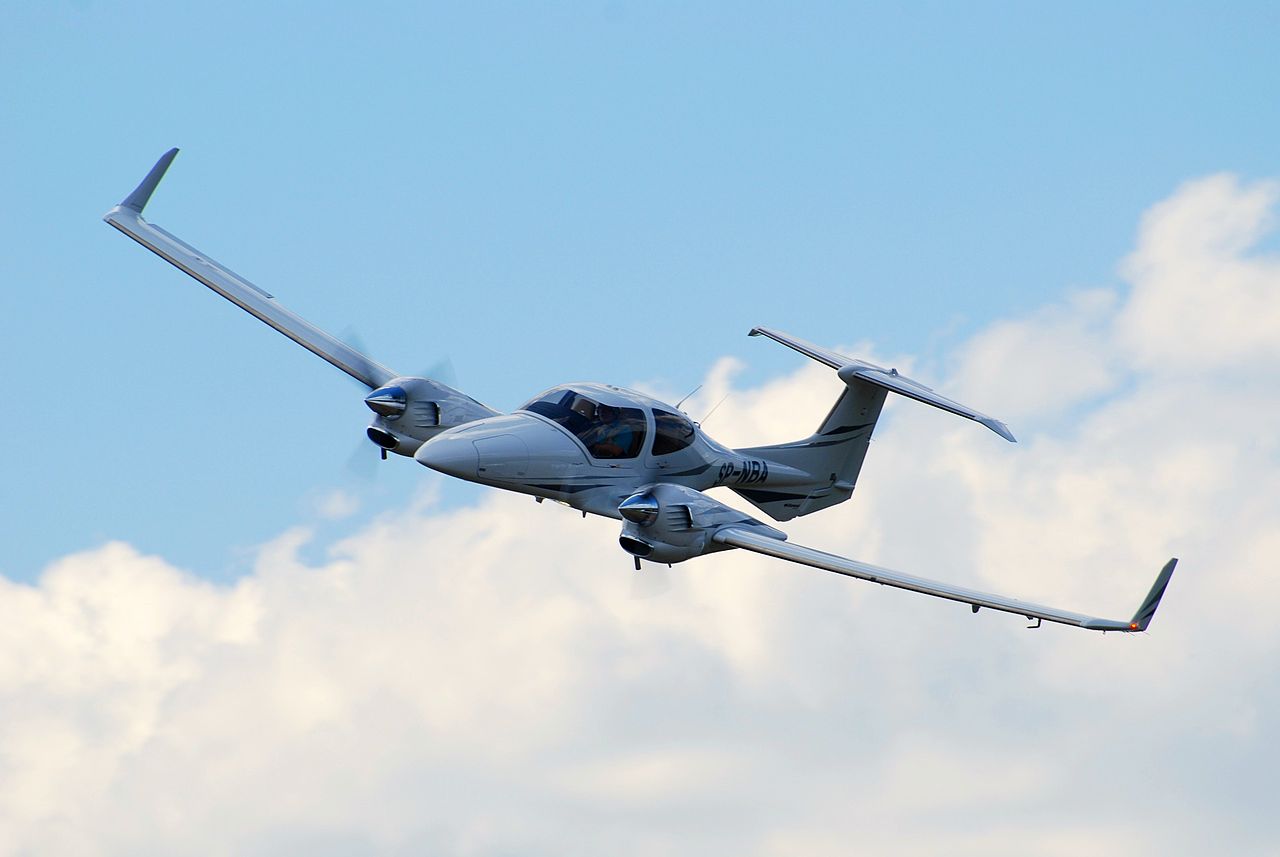
The multi-engine rating teaches your child to fly and handle emergencies in a twin-engine aircraft. The instrument rating teaches them to fly entirely by instruments, including approaches into airports in low cloud. It requires a set amount of instrument time, at least 40 hours, up to 20 of which can be done in an approved simulator, plus 50 hours of cross-country time as pilot-in-command, plus a written exam (INRAT) and a flight test. Twin-engine aircraft are expensive to rent, so this is often the costliest single block.
Step 7: Instructor rating, getting paid to build hours

This is the step most parents never hear about. After the CPL, your child can earn a Class 4 flight instructor rating (at least 200 hours total before starting, then 25 hours of instructor ground school and 30 hours of dual flight training) and teach new students, logging flight time while being paid for it. Others build hours with small charter operators, bush flying, aerial survey or skydiving operations. Instructing is popular because it is widely available and keeps skills sharp.
Step 8: ATPL exams and requirements
The ATPL has two parts. First, written exams: SAMRA (meteorology, radio aids and navigation) and SARON (regulations, procedures, aeroplane operations and general navigation), plus the INRAT already written for the instrument rating. There is no mandatory ground school, and many pilots write these exams early so they are ready when an opportunity comes.
Second, experience: minimum age 21, a Category 1 medical, a multi-engine instrument rating, and 1,500 hours total including 250 as pilot-in-command, plus minimums of 100 hours at night, 75 hours of instrument time and set amounts of cross-country flying.
Many airlines hire first officers (co-pilots) before 1,500 hours. Hiring minimums are set by each operator, but they commonly look for a CPL, a multi-engine instrument rating and passed ATPL exams. The full ATPL follows once the hours are met.
The trade-off: Route A keeps costs spread out and lets your child work between stages or switch schools, but it usually takes longer and demands real self-discipline.
Route B: Ab Initio and Integrated Programmes

This route suits families comfortable with a significant upfront cost who want a structured, full-time programme.
College diplomas and university degrees combine academic study with flight training. Graduates typically leave with a CPL, multi-engine and instrument ratings, plus a credential. Some run as integrated courses under Transport Canada's flight training unit standards, which have their own Transport Canada hour requirements for the commercial licence instead of the standard 200-hour route. Ask each school how its programme is approved.
Airline-partnered pathway programmes link a school with an airline, offering a defined route toward an interview or conditional offer once students meet set criteria. What these actually promise varies a great deal. Some guarantee an interview. Very few guarantee a job.
Pros:
- Structure: a set schedule, a cohort and staff who manage the sequence
- Speed: full-time training is usually faster
- Pathway interviews that are harder to get alone
- Public college and university programmes may qualify for government student loans
Cons:
- Large fees committed early, sometimes before your child has flown much
- Hard or costly to slow down, work, or change direction
- If your child decides flying is not for them, much of the money may be spent
- Pathways depend on airline hiring when your child graduates
Route A vs Route B at a Glance
| Route A: Modular | Route B: Ab initio / integrated | |
|---|---|---|
| Upfront cost | Low. Paid stage by stage. | High. Large blocks or per semester. |
| Total cost | Varies widely by school, aircraft and pace. | Varies widely; may add tuition and academic fees. |
| Total time | Often longer, especially part-time. | Often faster, on a fixed programme length. |
| Flexibility | High. Pause, work, change schools. | Lower. Fixed schedule and cohort. |
| Who it suits | Families spreading costs; students working while training; self-starters. | Families comfortable with a big commitment; students who want structure. |
On cost: We have deliberately not listed dollar figures. Prices vary widely by province, school, aircraft and pace, and many published estimates assume minimum hours few students achieve. Get written quotes from several schools, ask what is included, and ask what the average student actually pays.
A Realistic Timeline: Age 16-17 to First Airline Job
- 1Age 16-17Category 1 medical, ROC-A, student pilot permit, first lessons. Visit schools and compare routes.
- 2Age 17-18Private Pilot Licence (minimum age 17). Decide between modular and integrated training.
- 3Age 18-20Night rating, CPL, multi-engine and instrument ratings. On Route B, this sits inside a college or university programme (programme length varies). Write SAMRA and SARON once eligible.
- 4Age 19-23Build experience through instructing, charter or other entry-level flying. This can take one to several years.
- 5Roughly age 21-25First airline job, often as a first officer with a regional or smaller operator. Full ATPL once requirements are met.
Hiring runs in cycles. In strong years pilots move up fast; in weaker years the hour-building phase lasts longer. Plan for both.
How You Can Help as a Parent
Medical first, always
Book the Category 1 medical before paying for training. It is the cheapest insurance on this whole path.
Questions to ask any school
- What does the average student pay to reach a CPL with multi-engine and instrument ratings?
- Is payment per lesson, per block or upfront? What happens to prepaid money if my child stops or the school closes?
- How many aircraft and instructors do you have, and how far ahead are students booking?
- How often are aircraft out for maintenance, and how high is instructor turnover?
- What are your recent first-attempt results on written exams and flight tests?
- Is the programme eligible for government student loans?
- If you advertise an airline pathway, what exactly does it guarantee, in writing?
- Can we talk to current students and recent graduates?
Red flags
- Pressure to pay large sums before your child has flown much
- Cost estimates built only on minimum hours
- Verbal promises of airline jobs
- Frequently grounded aircraft or long waits for lessons
- Reluctance to put pricing, policies or pathway terms in writing
Funding to look into
- Student loans and grants: Federal and provincial aid may cover eligible programmes at public colleges and universities. Check with your province's student aid office.
- Bursaries and scholarships: Colleges, flying clubs, community foundations and aviation associations such as the Canadian Owners and Pilots Association (COPA) and groups supporting women in aviation offer awards.
- Air Cadets: The Royal Canadian Air Cadets programme offers aviation education and competitive glider and power flying scholarships for youth. Cadets is open to ages 12 to 18; glider scholarship applicants must be 16 and power scholarship applicants 17 by September 1 of the course year.
- Working while training: On the modular route, a job between stages is normal and sensible.
- Private loans: Some banks lend for flight training. Compare terms carefully with student aid.
The ROC-A: A Small Step to Take Early
Every pilot in Canada who uses an aviation radio needs a ROC-A. It falls under Innovation, Science and Economic Development Canada (ISED), the federal department responsible for radio licensing. Many students earn it before they start flying or early in private pilot training, so radio calls already feel familiar when they are in the cockpit. It covers radio procedures, the phonetic alphabet, emergency calls and the rules for aviation frequencies.
The ROC-A is earned by passing an exam with an ISED-authorized delegate examiner. With ROCALICENCE, the exam is held online over Google Meet or in person, in a 60-minute slot, and most candidates finish in about 30 minutes. It makes a good early win that builds confidence before the bigger licences. Your child can practise for free at the ROCALICENCE Study Hub.
Frequently Asked Questions
How old does my child have to be to start flying lessons?
There is no minimum age for lessons with an instructor. Solo flight on a student pilot permit starts at 14. Minimum ages are 17 for a PPL, 18 for a CPL and 21 for an ATPL.
How much does it cost to become an airline pilot in Canada?
It varies widely by route, school, province, aircraft and pace. Get written quotes from several schools and ask what the average student pays to reach a commercial licence with multi-engine and instrument ratings.
Does my child need a university degree to fly for an airline?
No Transport Canada pilot licence requires a degree. Some operators value post-secondary education, and a diploma or degree gives your child a fallback career, so check the current hiring requirements of operators that interest them.
What is a Category 1 medical, and when should we get it?
It is the medical certificate required for commercial and airline pilots, issued after an exam with a Transport Canada-approved CAME. Get it before paying for significant training.
Can my child work while training?
Yes, especially on the modular route. Many students train part-time while in school or working, then instruct to build hours while being paid.
How long does it take to become an airline pilot?
Many pilots take roughly four to eight years from first lesson to first airline job, depending on route, funding, how often they fly and the hiring market.
Is an airline pathway programme a job guarantee?
Usually not. Most offer an interview or conditional offer once standards are met. Get the exact terms in writing.
When should my child get the ROC-A?
Early. Many students earn it before their first lesson or during the first part of private pilot training. With ROCALICENCE, the exam can be taken online over Google Meet or in person.
If your child is ready for a first concrete step, the ROC-A is a sensible place to start. They can try the free practice questions at the ROCALICENCE Study Hub and book the exam whenever they feel ready.
Free ROC-A practice questionsBook the ROC-A exam
- My first flight as a 'pilot' by Fulvio Spada from Torino, Italy, licensed CC BY-SA 2.0. Resized for web.
- Cockpit Cessna 172 - C-GNLR by abdallahh from Montréal, Canada, licensed CC BY 2.0. Resized for web.
- Diamond DA42 Twin Star SP-NBA -- fly-by by Kuba Bożanowski from Warsaw, Poland, licensed CC BY 2.0. Resized for web.
- Exiting Cessna 172 - North-Wright Air Charter - Tuktoyaktuk - Northwest Territories - Canada by Adam Jones, Ph.D., licensed CC BY-SA 3.0. Resized for web.
- Cessna 172 en vol entre Sherbrooke et Trois-Rivières by Yan Gouger, licensed CC BY-SA 3.0. Resized for web.


